
A conflict thousands of miles from your office can still land on your desk as a supplier asking to reprice, a freight surcharge nobody budgeted for, or a customer payment that arrives worth less than the invoice promised. If you buy, sell or pay people in more than one currency, that is geopolitical risk FX exposure in practice, and it is the quarter you are in.
Your finance team will just call it a bad month. This post walks through how the current Middle East volatility reaches contracts, supply costs and cross-border payments, what it looks like at different company sizes, and what you can do about it without trying to predict the unpredictable.
- What is driving currency and supply cost volatility right now
- From headline to invoice: how foreign exchange risk travels
- Geopolitical risk FX exposure at three sizes of company
- Where volatility hides inside your contracts
- What payments teams feel first
- Seven practical moves that do not require a forecast
- Frequently asked questions
What is driving currency and supply cost volatility right now
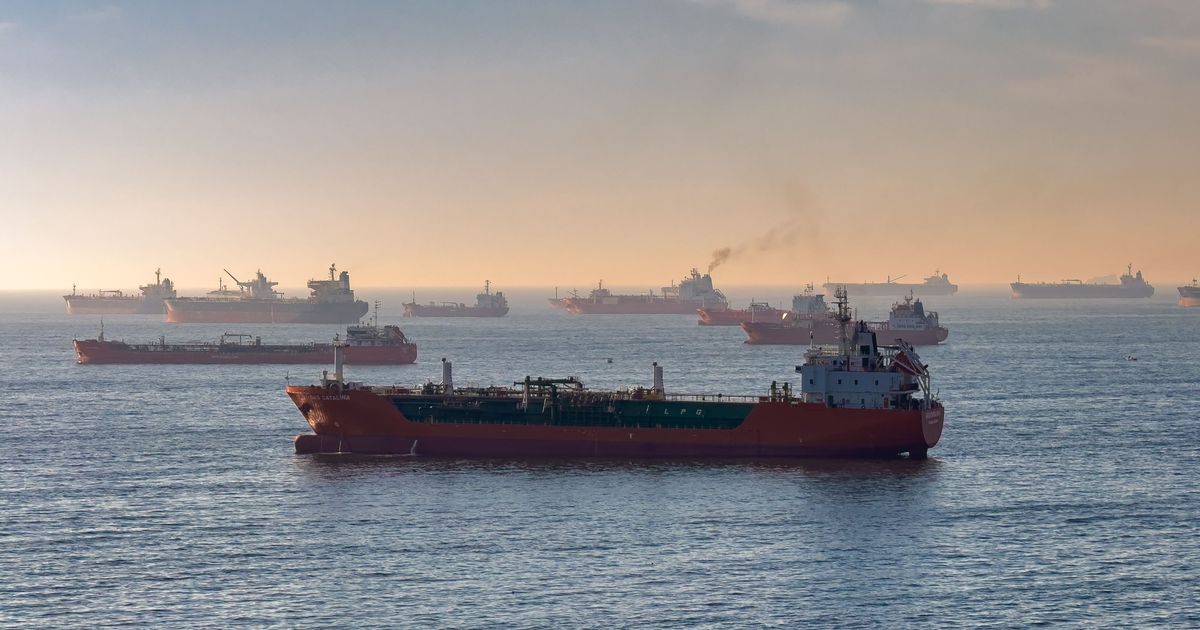
The conflict that began in February 2026 has now run for more than seven months, and flows through the Strait of Hormuz, which normally carries roughly a fifth of the world’s oil, remain badly constrained. The effects are showing up in three places at once: energy, shipping and financial markets.
The U.S. Energy Information Administration expects oil prices to ease through 2027 as supply workarounds expand, but it also warns that short-term price swings will likely be larger than its forecast suggests. In plain terms: even the optimists are not promising calm.
From headline to invoice: how foreign exchange risk travels
Currency risk and supply chain risk are not two separate problems. They are the same shock arriving by two routes. Here is the chain most businesses end up living through:
September shows the last three links in action. Six of the G10 central banks raised interest rates, the U.S. 10-year Treasury yield rose 53 basis points (its biggest monthly jump since September 2022), and the U.S. dollar index gained about 2%. The euro slipped from roughly 1.16 to 1.14 against the dollar and the pound from roughly 1.36 to 1.33. MUFG Research also notes that emerging-market currency volatility surged toward the peaks seen when the conflict began, while volatility among the major currencies rose more modestly.
If you price in one currency and pay costs in another, those moves are not abstract. They are the difference between the margin you quoted and the margin you keep.
Geopolitical risk FX exposure at three sizes of company
Small business
You order from an overseas supplier on a quote that was valid for 30 days. Freight costs have moved, the supplier wants to reprice, and the exchange rate has shifted since you agreed the price. There is no treasury team to absorb it.
Illustration: a 3% currency move on a $200,000 order is $6,000, before any freight change.
The pain: rate moves come straight out of margin.
Mid-size company
You signed fixed-price contracts with customers months ago, but your suppliers are repricing now. Costs are in several currencies, revenue in one, and the gap between signing and paying keeps widening.
The pain: margin squeeze between the day you sign and the day you pay.
Large company
The budget rate was set last year. Subsidiaries hold different currencies, hedges are rolling off, and finance has to explain variance to budget across entities and banking partners.
The pain: forecasting and reporting accuracy, not just the rate itself.
Where volatility hides inside your contracts
Most companies find their currency exposure by reading their contracts closely for the first time during a volatile quarter. A few places to look:
- Payment terms. Net 60 or net 90 means you carry currency risk for two or three months after the deal is done. The longer the gap, the bigger the potential swing.
- Fixed prices in one currency against costs in another. This is the classic squeeze, and it gets sharper when input costs are rising at the same time.
- Surcharge and escalation language. Who pays when fuel, freight or insurance costs jump? If the contract is silent, the answer is usually decided by whoever has the stronger hand in the negotiation, and that is rarely a smaller supplier or customer.
- Currency adjustment clauses. Some contracts share the risk once a rate moves outside an agreed band. If yours do not, it may be worth raising at renewal.
- Force majeure and sanctions wording. These clauses decide what happens when delivery or payment becomes impossible. Have your attorney review how they apply to your routes and counterparties.
What payments teams feel first
In volatile markets, quotes can move quickly, and the spread you pay over the mid-market rate can matter as much as the headline rate. Payments that touch affected regions can also take longer or need extra documentation as banks apply additional checks. None of that shows up in a contract, but all of it shows up in cash flow. The practical lesson is to know your all-in cost before you send, and to leave more time than you used to.
Seven practical moves that do not require a forecast
- Map your exposure by currency and by date. What do you owe, and what do you expect to receive, in each currency, and when?
- Know the gap between your budget rate and today’s rate. That number is the real size of the problem.
- Match protection to the contract. For a known payment on a known date, a forward contract can lock in a rate. The trade-off is real: you give up the benefit if the market moves in your favor.
- Hold the currencies you will need to spend. A multi-currency account lets you convert when it suits you rather than on invoice day.
- Plan in ranges, not points. Stress test your margins at 5% and 10% currency moves. If a 10% move breaks the plan, that is worth knowing now.
- Tighten terms at renewal. Shorter quote validity, currency adjustment bands and clear surcharge language all reduce surprises.
- Add time to payment timelines. Confirm documentation requirements early, especially for any payment routed through or near the region.
An honest note: nobody, including us, knows how this ends or when. Forecasts differ and they change monthly. The goal is not to guess the next move. It is to make sure that whichever way it goes, your business can absorb it.
Frequently asked questions
How does geopolitical risk affect exchange rates?
Conflicts and supply disruptions tend to move energy prices, inflation expectations and interest rate expectations, and those are major drivers of currency values. Investors also move toward currencies seen as safer, which is why the U.S. dollar and Swiss franc are often supported in stressed periods. September 2026 is a current example: higher energy costs fed into rate hikes, and currencies repriced within weeks.
How can a small business protect itself from currency volatility?
Start by knowing your exposure: what you owe and expect to receive in each currency, and when. From there, common tools include locking a rate with a forward contract for a known payment, holding foreign currency in a multi-currency account, shortening quote validity, and adding currency adjustment clauses to contracts. The right mix depends on your margins and cash flow, so speak with your own advisors.
What is a forward contract?
A forward contract is an agreement to exchange currency at a set rate on a future date, so you know the cost of a known payment in advance. The trade-off is that you give up the benefit if the market moves in your favor. Our guide to forward contracts explains how they work.
Not sure where your exposure sits?
Our Free FX Review looks at the currencies you pay and receive, the timing, and what you are paying today. No obligation, and no sales script.
Book your Free FX ReviewNextpay Global. Powered by Corpay.
Suggested reading
Sources
- U.S. Energy Information Administration, Short-Term Energy Outlook, global oil markets (released October 6, 2026)
- World Bank Group, Middle East Conflict Further Weakens Regional Outlook (October 6, 2026)
- MUFG Research, Monthly Foreign Exchange Outlook (October 1, 2026)
- BlackRock Investment Institute, Middle East conflict: energy risks in focus (Strait of Hormuz share of global oil)
Disclaimer: This article is general information, not financial, legal, tax or investment advice. Market figures are as of the dates cited and change quickly. Forward contracts and other FX products carry risk, including the risk of giving up favorable rate moves, and suitability depends on your circumstances; speak with your own advisors. Nextpay Global is powered by Corpay and has no affiliation with the organizations cited above, and takes no position on the conflict itself.